Implicit and parametric tangents
Find branch-specific tangents and normals, handle zero coordinate rates, and verify slopes across curve representations.
More
Offline pages
Saved on this device only. Connect at least once every 30 days to confirm Premium. Sign-out or a change of account removes saved copies.
Find this activity in your course
On this page
You stopped at:
ContinueRevision Mode is on. Questions and activities are hidden.
An implicit y still depends on x
An equation relating x and y may describe several local branches instead of one global function y = f(x). To find a branch’s tangent gradient, differentiate every dependent occurrence of y with respect to x. In particular,
The first expression uses the chain rule; the second also uses the product rule. Treating y as a constant would erase its contribution to the changing curve.
For x² + xy + y² = 7, differentiation gives
Collect the terms containing y' before dividing:
At (1,2), the original equation gives 1 + 2 + 4 = 7, so the point is on the curve. The gradient is -4/5. The tangent and normal are
A tangent and normal to an implicit curve
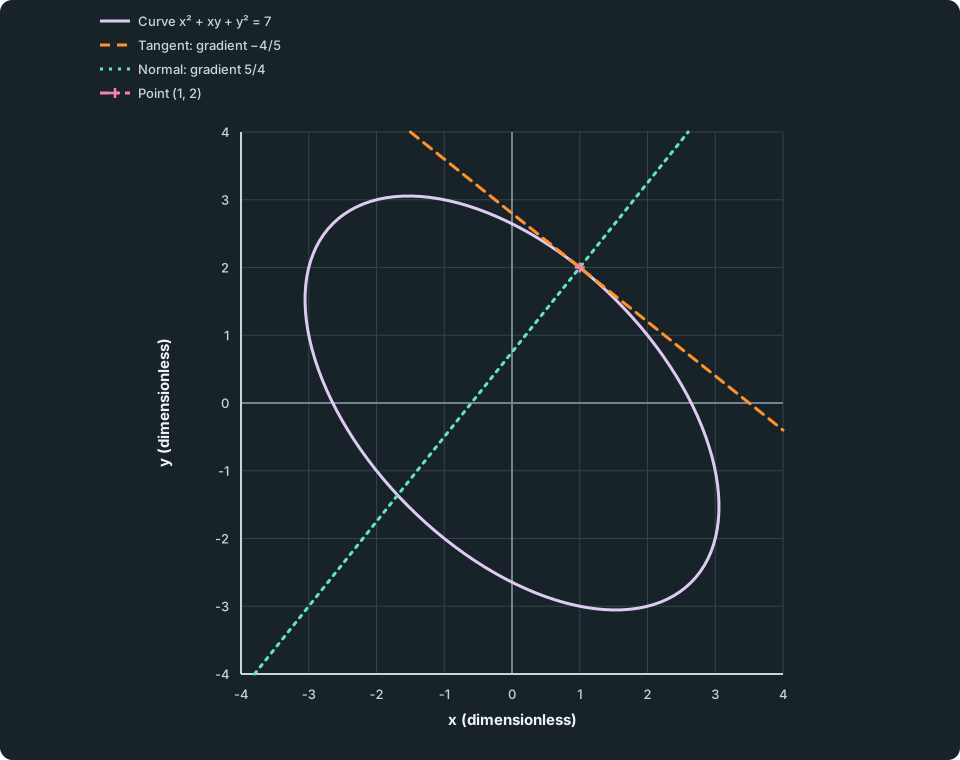
The curve has more than one y-value for some x-values. A cross marks (1, 2), where the tangent y − 2 = −4(x − 1)/5 touches the curve and the normal y − 2 = 5(x − 1)/4 is perpendicular to it. Equal coordinate scales preserve that perpendicularity.
Scroll across the figure to read all labels.
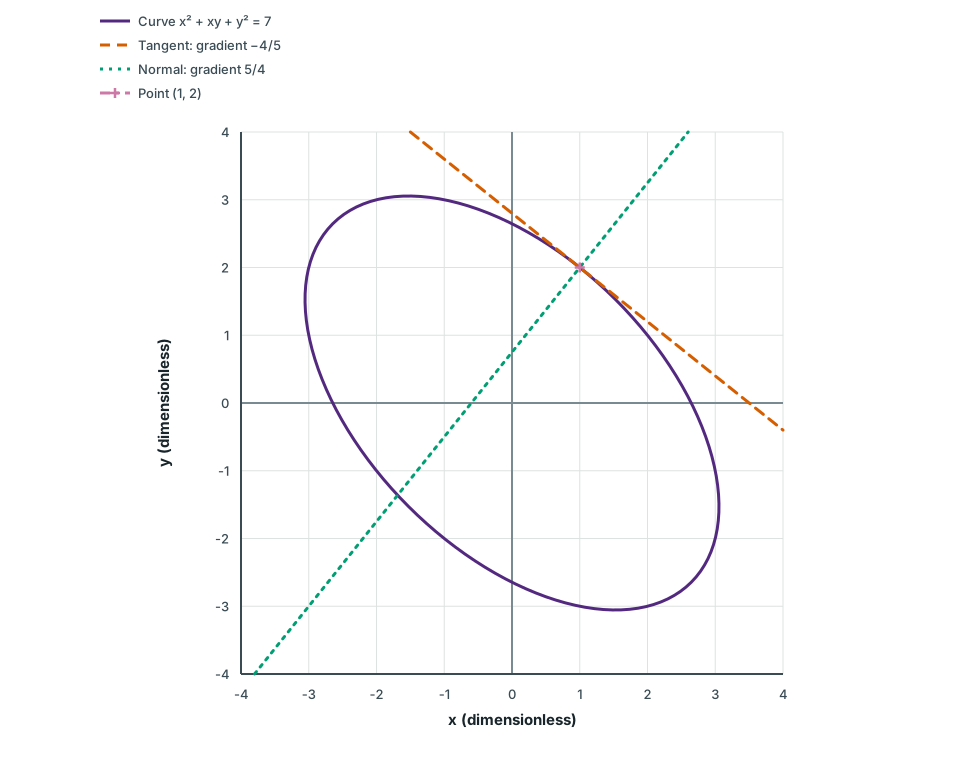
View figure data
| Series | x (dimensionless) | y (dimensionless) |
|---|---|---|
| Curve x² + xy + y² = 7 | 1.52753 | 1.52753 |
| Curve x² + xy + y² = 7 | 1.65551 | 1.39586 |
| Curve x² + xy + y² = 7 | 1.77950 | 1.26084 |
| Curve x² + xy + y² = 7 | 1.89920 | 1.12278 |
| Curve x² + xy + y² = 7 | 2.01433 | 0.98201 |
| Curve x² + xy + y² = 7 | 2.12461 | 0.83888 |
| Curve x² + xy + y² = 7 | 2.22977 | 0.69373 |
| Curve x² + xy + y² = 7 | 2.32956 | 0.54691 |
| Curve x² + xy + y² = 7 | 2.42373 | 0.39876 |
| Curve x² + xy + y² = 7 | 2.51207 | 0.24966 |
| Curve x² + xy + y² = 7 | 2.59436 | 0.09996 |
| Curve x² + xy + y² = 7 | 2.67039 | -0.04999 |
| Curve x² + xy + y² = 7 | 2.73999 | -0.19981 |
| Curve x² + xy + y² = 7 | 2.80299 | -0.34915 |
| Curve x² + xy + y² = 7 | 2.85924 | -0.49765 |
| Curve x² + xy + y² = 7 | 2.90860 | -0.64496 |
| Curve x² + xy + y² = 7 | 2.95095 | -0.79071 |
| Curve x² + xy + y² = 7 | 2.98620 | -0.93455 |
| Curve x² + xy + y² = 7 | 3.01425 | -1.07614 |
| Curve x² + xy + y² = 7 | 3.03503 | -1.21514 |
| Curve x² + xy + y² = 7 | 3.04851 | -1.35121 |
| Curve x² + xy + y² = 7 | 3.05464 | -1.48403 |
| Curve x² + xy + y² = 7 | 3.05341 | -1.61327 |
| Curve x² + xy + y² = 7 | 3.04483 | -1.73863 |
| Curve x² + xy + y² = 7 | 3.02891 | -1.85980 |
| Curve x² + xy + y² = 7 | 3.00570 | -1.97648 |
| Curve x² + xy + y² = 7 | 2.97524 | -2.08841 |
| Curve x² + xy + y² = 7 | 2.93762 | -2.19530 |
| Curve x² + xy + y² = 7 | 2.89292 | -2.29691 |
| Curve x² + xy + y² = 7 | 2.84125 | -2.39298 |
| Curve x² + xy + y² = 7 | 2.78273 | -2.48329 |
| Curve x² + xy + y² = 7 | 2.71752 | -2.56761 |
| Curve x² + xy + y² = 7 | 2.64575 | -2.64575 |
| Curve x² + xy + y² = 7 | 2.56761 | -2.71752 |
| Curve x² + xy + y² = 7 | 2.48329 | -2.78273 |
| Curve x² + xy + y² = 7 | 2.39298 | -2.84125 |
| Curve x² + xy + y² = 7 | 2.29691 | -2.89292 |
| Curve x² + xy + y² = 7 | 2.19530 | -2.93762 |
| Curve x² + xy + y² = 7 | 2.08841 | -2.97524 |
| Curve x² + xy + y² = 7 | 1.97648 | -3.00570 |
| Curve x² + xy + y² = 7 | 1.85980 | -3.02891 |
| Curve x² + xy + y² = 7 | 1.73863 | -3.04483 |
| Curve x² + xy + y² = 7 | 1.61327 | -3.05341 |
| Curve x² + xy + y² = 7 | 1.48403 | -3.05464 |
| Curve x² + xy + y² = 7 | 1.35121 | -3.04851 |
| Curve x² + xy + y² = 7 | 1.21514 | -3.03503 |
| Curve x² + xy + y² = 7 | 1.07614 | -3.01425 |
| Curve x² + xy + y² = 7 | 0.93455 | -2.98620 |
| Curve x² + xy + y² = 7 | 0.79071 | -2.95095 |
| Curve x² + xy + y² = 7 | 0.64496 | -2.90860 |
| Curve x² + xy + y² = 7 | 0.49765 | -2.85924 |
| Curve x² + xy + y² = 7 | 0.34915 | -2.80299 |
| Curve x² + xy + y² = 7 | 0.19981 | -2.73999 |
| Curve x² + xy + y² = 7 | 0.04999 | -2.67039 |
| Curve x² + xy + y² = 7 | -0.09996 | -2.59436 |
| Curve x² + xy + y² = 7 | -0.24966 | -2.51207 |
| Curve x² + xy + y² = 7 | -0.39876 | -2.42373 |
| Curve x² + xy + y² = 7 | -0.54691 | -2.32956 |
| Curve x² + xy + y² = 7 | -0.69373 | -2.22977 |
| Curve x² + xy + y² = 7 | -0.83888 | -2.12461 |
| Curve x² + xy + y² = 7 | -0.98201 | -2.01433 |
| Curve x² + xy + y² = 7 | -1.12278 | -1.89920 |
| Curve x² + xy + y² = 7 | -1.26084 | -1.77950 |
| Curve x² + xy + y² = 7 | -1.39586 | -1.65551 |
| Curve x² + xy + y² = 7 | -1.52753 | -1.52753 |
| Curve x² + xy + y² = 7 | -1.65551 | -1.39586 |
| Curve x² + xy + y² = 7 | -1.77950 | -1.26084 |
| Curve x² + xy + y² = 7 | -1.89920 | -1.12278 |
| Curve x² + xy + y² = 7 | -2.01433 | -0.98201 |
| Curve x² + xy + y² = 7 | -2.12461 | -0.83888 |
| Curve x² + xy + y² = 7 | -2.22977 | -0.69373 |
| Curve x² + xy + y² = 7 | -2.32956 | -0.54691 |
| Curve x² + xy + y² = 7 | -2.42373 | -0.39876 |
| Curve x² + xy + y² = 7 | -2.51207 | -0.24966 |
| Curve x² + xy + y² = 7 | -2.59436 | -0.09996 |
| Curve x² + xy + y² = 7 | -2.67039 | 0.04999 |
| Curve x² + xy + y² = 7 | -2.73999 | 0.19981 |
| Curve x² + xy + y² = 7 | -2.80299 | 0.34915 |
| Curve x² + xy + y² = 7 | -2.85924 | 0.49765 |
| Curve x² + xy + y² = 7 | -2.90860 | 0.64496 |
| Curve x² + xy + y² = 7 | -2.95095 | 0.79071 |
| Curve x² + xy + y² = 7 | -2.98620 | 0.93455 |
| Curve x² + xy + y² = 7 | -3.01425 | 1.07614 |
| Curve x² + xy + y² = 7 | -3.03503 | 1.21514 |
| Curve x² + xy + y² = 7 | -3.04851 | 1.35121 |
| Curve x² + xy + y² = 7 | -3.05464 | 1.48403 |
| Curve x² + xy + y² = 7 | -3.05341 | 1.61327 |
| Curve x² + xy + y² = 7 | -3.04483 | 1.73863 |
| Curve x² + xy + y² = 7 | -3.02891 | 1.85980 |
| Curve x² + xy + y² = 7 | -3.00570 | 1.97648 |
| Curve x² + xy + y² = 7 | -2.97524 | 2.08841 |
| Curve x² + xy + y² = 7 | -2.93762 | 2.19530 |
| Curve x² + xy + y² = 7 | -2.89292 | 2.29691 |
| Curve x² + xy + y² = 7 | -2.84125 | 2.39298 |
| Curve x² + xy + y² = 7 | -2.78273 | 2.48329 |
| Curve x² + xy + y² = 7 | -2.71752 | 2.56761 |
| Curve x² + xy + y² = 7 | -2.64575 | 2.64575 |
| Curve x² + xy + y² = 7 | -2.56761 | 2.71752 |
| Curve x² + xy + y² = 7 | -2.48329 | 2.78273 |
| Curve x² + xy + y² = 7 | -2.39298 | 2.84125 |
| Curve x² + xy + y² = 7 | -2.29691 | 2.89292 |
| Curve x² + xy + y² = 7 | -2.19530 | 2.93762 |
| Curve x² + xy + y² = 7 | -2.08841 | 2.97524 |
| Curve x² + xy + y² = 7 | -1.97648 | 3.00570 |
| Curve x² + xy + y² = 7 | -1.85980 | 3.02891 |
| Curve x² + xy + y² = 7 | -1.73863 | 3.04483 |
| Curve x² + xy + y² = 7 | -1.61327 | 3.05341 |
| Curve x² + xy + y² = 7 | -1.48403 | 3.05464 |
| Curve x² + xy + y² = 7 | -1.35121 | 3.04851 |
| Curve x² + xy + y² = 7 | -1.21514 | 3.03503 |
| Curve x² + xy + y² = 7 | -1.07614 | 3.01425 |
| Curve x² + xy + y² = 7 | -0.93455 | 2.98620 |
| Curve x² + xy + y² = 7 | -0.79071 | 2.95095 |
| Curve x² + xy + y² = 7 | -0.64496 | 2.90860 |
| Curve x² + xy + y² = 7 | -0.49765 | 2.85924 |
| Curve x² + xy + y² = 7 | -0.34915 | 2.80299 |
| Curve x² + xy + y² = 7 | -0.19981 | 2.73999 |
| Curve x² + xy + y² = 7 | -0.04999 | 2.67039 |
| Curve x² + xy + y² = 7 | 0.09996 | 2.59436 |
| Curve x² + xy + y² = 7 | 0.24966 | 2.51207 |
| Curve x² + xy + y² = 7 | 0.39876 | 2.42373 |
| Curve x² + xy + y² = 7 | 0.54691 | 2.32956 |
| Curve x² + xy + y² = 7 | 0.69373 | 2.22977 |
| Curve x² + xy + y² = 7 | 0.83888 | 2.12461 |
| Curve x² + xy + y² = 7 | 0.98201 | 2.01433 |
| Curve x² + xy + y² = 7 | 1.00000 | 2.00000 |
| Curve x² + xy + y² = 7 | 1.12278 | 1.89920 |
| Curve x² + xy + y² = 7 | 1.26084 | 1.77950 |
| Curve x² + xy + y² = 7 | 1.39586 | 1.65551 |
| Curve x² + xy + y² = 7 | 1.52753 | 1.52753 |
| Tangent: gradient −4/5 | -1.50000 | 4.00000 |
| Tangent: gradient −4/5 | 4.00000 | -0.40000 |
| Normal: gradient 5/4 | -3.80000 | -4.00000 |
| Normal: gradient 5/4 | 2.60000 | 4.00000 |
| Point (1, 2) | 1.00000 | 2.00000 |
The same input x = 1 also occurs at (1,-3), since 1-3 + 9 = 7. At that point the slope is -1/5, not -4/5. Substituting x alone cannot select the branch; check the complete point and original equation before evaluating the derivative.
Use numerical tools on a defined branch
A calculator that accepts y as a function of x needs a branch of the implicit equation. Solving the quadratic in y gives
The plus branch contains (1,2); the minus branch contains (1,-3). Enter the plus expression and use the numerical-derivative operation at input x = 1. It should report approximately -0.8, agreeing with the exact derivative -4/5. Record the chosen branch and input with the result; a numerical readout does not identify them for you.
A maximum search on the plus branch with a search interval such as -2.5 ≤ x ≤ 0 gives approximately (-1.528,3.055). Verify the location algebraically: a horizontal tangent requires 2x + y = 0 while x + 2y ≠ 0. Substitution into the curve gives the exact point (- square root of (7/3),2 square root of (7/3)) on that branch. Its gradient is positive at x = -2 and negative at x = 0, with only that stationary input between them, confirming the maximum in the search interval.
A plotting window, search interval and branch are different choices. Preserve the real input restriction, check the original equation at reported points, and retain exact values when the algebra provides them. A large slope displayed near a vertical tangent is a numerical approximation, not a finite derivative at the vertical tangent itself.
A zero denominator calls for geometry, not a division verdict
After collecting terms, an implicit derivative equation has the form A + B y' = 0. Division gives y' = -A/B only where the coefficient B is nonzero. When that coefficient vanishes, return to the original relation and check its local direction, rather than treating an undefined quotient as an ordinary gradient.
For example, x² + y² = 25 gives dy/dx = -x/y where y ≠ 0. At (5,0) the curve exists, but the y-as-a-function-of-x derivative is not finite. The tangent is the vertical line x = 5 and the normal is the horizontal line y = 0.
At (0,5) the gradient is zero: the tangent is y = 5 and the normal is x = 0. A horizontal tangent and a vertical tangent require different line equations; neither permits dividing by zero to manufacture a normal gradient.
If both collected coefficients vanish, the quotient alone does not identify the tangent. For instance, x²-y² = 0 factors into the two lines y = x and y = -x. At their intersection (0,0) there are two branch directions, rather than one gradient recovered from 0/0.
Check your understanding 1 An undefined quotient need not remove the curve point
For x² + y² = 25, give the tangent and normal at (-5,0). Explain why the undefined value of -x/y there does not mean the original curve is undefined at that point.
Show answer
The point satisfies (-5)² + 0² = 25. The tangent is x = -5 and the normal is y = 0. The quotient for dy/dx cannot give a finite slope there, but the original curve still contains the point. Indeed, dx/dy = -y/x = 0 there, confirming the vertical tangent in the x–y plane.
A parameter drives both coordinates
If x = x(t) and y = y(t), a nonzero horizontal rate gives
This follows from the chain rule dy/dt = (dy/dx)(dx/dt). Divide the coordinate rates, not the coordinate values y/x, and evaluate both rates at the same parameter value.
For x = t² + 1 and y = t³-t, with real t,
At t = 1, the point is (2,0) and the rates are (2,2), giving gradient 1. The tangent is y = x-2 and the normal is y = -x + 2.
At t = -1, the same point (2,0) is reached with rates (-2,2), giving gradient -1. Its tangent is now y = -x + 2 and its normal is y = x-2. If asked for tangents at the point with no branch specified, both parameter values must be considered. A restriction such as t ≥ 0 would select only the first visit.
Check your understanding 2 The parameter is not the x-coordinate
For x = 2t + 1, y = t²-3, find the tangent and normal at t = 2. Show the curve point and the two coordinate rates.
Show answer
The point is (5,1). The rates are dx/dt = 2 and dy/dt = 4, so dy/dx = 2. The tangent is y-1 = 2(x-5) and the normal is y-1 = -(x-5)/2. Using t = 2 as the x-coordinate would put both lines through the wrong point.
Zero coordinate rates have different meanings
When dy/dt = 0 but dx/dt ≠ 0, the tangent is horizontal. When dx/dt = 0 but dy/dt ≠ 0, the tangent is vertical. In the example x = t² + 1, y = t³-t at t = 0, the point is (1,0) and the rate pair is (0,-1). Thus the tangent is x = 1 and the normal is y = 0.
A nonzero rate pair (vₓ,vy) gives a tangent direction. Through (x₀,y₀), the line equations can be written without dividing by either rate:
The first condition makes the displacement along the tangent direction; the second makes it perpendicular. These equations handle horizontal and vertical cases too, but require (vₓ,vy) ≠ (0,0).
If both rates vanish, inspect the curve or a limiting direction instead of assigning a horizontal or vertical line automatically. A parameter can temporarily have zero rates while its traced curve still has a well-defined tangent.
Check your understanding 3 A stalled parameter can still trace a straight line
For x = t³ and y = 2t³ + 1, find the tangent and normal at t = 0. Explain why directly dividing the two parameter rates fails and how the original relation resolves the question.
Show answer
Both rates vanish at zero, so their quotient is 0/0 and gives no slope. But eliminating t gives y = 2x + 1, with all real x possible. The traced curve is a straight line through (0,1) with gradient 2. Its tangent is y = 2x + 1 and its normal is y-1 = -x/2.
For nonzero t, the rate quotient is 6t²/(3t²) = 2, consistent with this direction. Unlike a removed input in a rational function, the original parametrisation really does contain the point at t = 0.
Try it yourself 1
Check the proposed normal
Problem
An ellipse is described by x = 2 cos t, y = 3 sin t, with 0 ≤ t < 2π and t measured in radians. At t = π/6, find its tangent and normal using the coordinate rates. Verify the tangent gradient from x²/4 + y²/9 = 1. A proposal uses the line from the origin to the curve point as the normal. Decide whether that line is correct here, showing a check.
Write your answer, then compare it with the solution
Hints
Hint 1
Check perpendicularity at the actual point
Evaluate both coordinates and both rates at the stated parameter. An ellipse’s centre alone does not determine which line is perpendicular to its tangent.
Show full solution
Use the coordinate rates
Method
Evaluate the point and the derivatives with respect to t.Reason
The point and slope use different quantities, all at the same parameter value.Working
Answer
The point is (square root of 3,3/2). The rates are dx/dt = -2 sin(π/6) = -1 and dy/dt = 3 cos(π/6) = 3 square root of 3/2, giving tangent gradient -3 square root of 3/2. Hence the tangent is y-3/2 = -(3 square root of 3/2)(x- square root of 3) and the normal is y-3/2 = 2(x- square root of 3)/(3 square root of 3).Verify with the implicit equation
Method
Differentiate the ellipse’s Cartesian relation.Reason
The two representations describe the same curve and must give the same local tangent.Working
Answer
x/2 + (2y/9)y' = 0, so y' = -9x/(4y). At (square root of 3,3/2) this gives -3 square root of 3/2, agreeing with the parameter-rate method.Test the line through the centre
Method
Compare the proposed line with the perpendicularity condition.Reason
A centre-to-point line is automatically normal to a circle, but that conclusion does not extend to every ellipse point.Working
Answer
The proposed line’s gradient is (3/2)/square root of 3 = square root of 3/2. Its product with the tangent gradient is -9/4, not -1, so it is not the normal. The correct normal meets the y-axis at 5/6, rather than passing through the origin.
Quick check
The point satisfies both representations, and both derivative methods agree. The correct normal uses the tangent’s perpendicular direction, not an assumption that every oval behaves like a circle. Compare the parameter choice, point, rates and line conditions separately.
For an implicit curve, retain every dependent derivative and check the chosen branch. For a parametric curve, use the same parameter in both coordinates and rates, and inspect zero-rate cases before dividing. A tangent or normal is a line through a real curve point, not a derivative quotient on its own.
Keep track of this lesson
Mark the lesson done when you have worked through it.
Lesson progress is optional and kept on this device.
Loading lesson controls…
Your lesson mark records your own study. Checks are kept separately in My Learning.