Unit circle and inverse values
Use signed unit-circle coordinates and exact ratios, then select principal inverse values without losing the original angle context.
More
Offline pages
Saved on this device only. Connect at least once every 30 days to confirm Premium. Sign-out or a change of account removes saved copies.
Find this activity in your course
On this page
You stopped at:
ContinueRevision Mode is on. Questions and activities are hidden.
Coordinates define sine and cosine for any angle
A right-triangle ratio starts with an acute angle. The unit circle extends that idea to any angle: begin on the positive horizontal axis, turn anticlockwise for a positive angle and clockwise for a negative angle. The point reached on the circle of radius 1 has coordinates (cos θ, sin θ).
Cosine is the horizontal coordinate and sine the vertical coordinate. In quadrant II the point is left of the vertical axis and above the horizontal axis, so cosine is negative and sine positive. At 150° the reference angle is 30°, giving
A unit-circle point can have negative cosine and positive sine
A circle of radius one centred at the origin, with equal physical scales on both axes. A radius ends in quadrant II at approximately (−0.866, 0.5); dotted lines project that point onto each coordinate axis.
Scroll across the figure to read all labels.
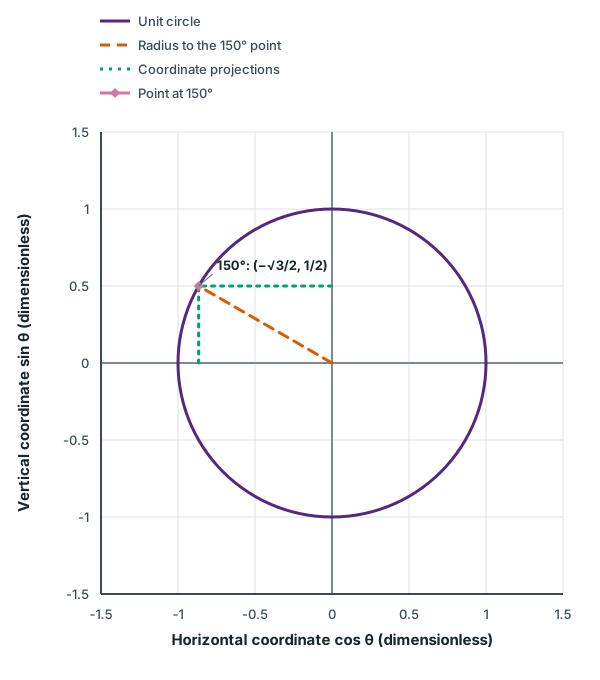
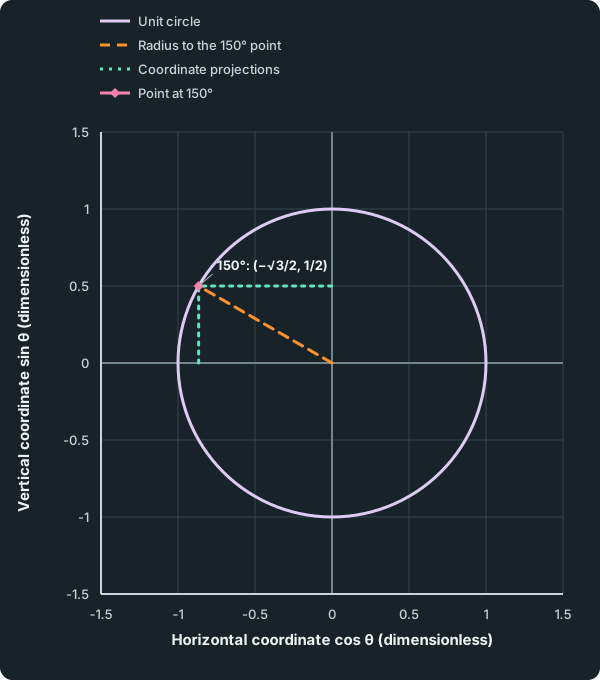
View figure data
| Series | Horizontal coordinate cos θ (dimensionless) | Vertical coordinate sin θ (dimensionless) |
|---|---|---|
| Unit circle | 1.00000 | 0.00000 |
| Unit circle | 0.99863 | 0.05234 |
| Unit circle | 0.99452 | 0.10453 |
| Unit circle | 0.98769 | 0.15643 |
| Unit circle | 0.97815 | 0.20791 |
| Unit circle | 0.96593 | 0.25882 |
| Unit circle | 0.95106 | 0.30902 |
| Unit circle | 0.93358 | 0.35837 |
| Unit circle | 0.91355 | 0.40674 |
| Unit circle | 0.89101 | 0.45399 |
| Unit circle | 0.86603 | 0.50000 |
| Unit circle | 0.83867 | 0.54464 |
| Unit circle | 0.80902 | 0.58779 |
| Unit circle | 0.77715 | 0.62932 |
| Unit circle | 0.74314 | 0.66913 |
| Unit circle | 0.70711 | 0.70711 |
| Unit circle | 0.66913 | 0.74314 |
| Unit circle | 0.62932 | 0.77715 |
| Unit circle | 0.58779 | 0.80902 |
| Unit circle | 0.54464 | 0.83867 |
| Unit circle | 0.50000 | 0.86603 |
| Unit circle | 0.45399 | 0.89101 |
| Unit circle | 0.40674 | 0.91355 |
| Unit circle | 0.35837 | 0.93358 |
| Unit circle | 0.30902 | 0.95106 |
| Unit circle | 0.25882 | 0.96593 |
| Unit circle | 0.20791 | 0.97815 |
| Unit circle | 0.15643 | 0.98769 |
| Unit circle | 0.10453 | 0.99452 |
| Unit circle | 0.05234 | 0.99863 |
| Unit circle | 0.00000 | 1.00000 |
| Unit circle | -0.05234 | 0.99863 |
| Unit circle | -0.10453 | 0.99452 |
| Unit circle | -0.15643 | 0.98769 |
| Unit circle | -0.20791 | 0.97815 |
| Unit circle | -0.25882 | 0.96593 |
| Unit circle | -0.30902 | 0.95106 |
| Unit circle | -0.35837 | 0.93358 |
| Unit circle | -0.40674 | 0.91355 |
| Unit circle | -0.45399 | 0.89101 |
| Unit circle | -0.50000 | 0.86603 |
| Unit circle | -0.54464 | 0.83867 |
| Unit circle | -0.58779 | 0.80902 |
| Unit circle | -0.62932 | 0.77715 |
| Unit circle | -0.66913 | 0.74314 |
| Unit circle | -0.70711 | 0.70711 |
| Unit circle | -0.74314 | 0.66913 |
| Unit circle | -0.77715 | 0.62932 |
| Unit circle | -0.80902 | 0.58779 |
| Unit circle | -0.83867 | 0.54464 |
| Unit circle | -0.86603 | 0.50000 |
| Unit circle | -0.89101 | 0.45399 |
| Unit circle | -0.91355 | 0.40674 |
| Unit circle | -0.93358 | 0.35837 |
| Unit circle | -0.95106 | 0.30902 |
| Unit circle | -0.96593 | 0.25882 |
| Unit circle | -0.97815 | 0.20791 |
| Unit circle | -0.98769 | 0.15643 |
| Unit circle | -0.99452 | 0.10453 |
| Unit circle | -0.99863 | 0.05234 |
| Unit circle | -1.00000 | 0.00000 |
| Unit circle | -0.99863 | -0.05234 |
| Unit circle | -0.99452 | -0.10453 |
| Unit circle | -0.98769 | -0.15643 |
| Unit circle | -0.97815 | -0.20791 |
| Unit circle | -0.96593 | -0.25882 |
| Unit circle | -0.95106 | -0.30902 |
| Unit circle | -0.93358 | -0.35837 |
| Unit circle | -0.91355 | -0.40674 |
| Unit circle | -0.89101 | -0.45399 |
| Unit circle | -0.86603 | -0.50000 |
| Unit circle | -0.83867 | -0.54464 |
| Unit circle | -0.80902 | -0.58779 |
| Unit circle | -0.77715 | -0.62932 |
| Unit circle | -0.74314 | -0.66913 |
| Unit circle | -0.70711 | -0.70711 |
| Unit circle | -0.66913 | -0.74314 |
| Unit circle | -0.62932 | -0.77715 |
| Unit circle | -0.58779 | -0.80902 |
| Unit circle | -0.54464 | -0.83867 |
| Unit circle | -0.50000 | -0.86603 |
| Unit circle | -0.45399 | -0.89101 |
| Unit circle | -0.40674 | -0.91355 |
| Unit circle | -0.35837 | -0.93358 |
| Unit circle | -0.30902 | -0.95106 |
| Unit circle | -0.25882 | -0.96593 |
| Unit circle | -0.20791 | -0.97815 |
| Unit circle | -0.15643 | -0.98769 |
| Unit circle | -0.10453 | -0.99452 |
| Unit circle | -0.05234 | -0.99863 |
| Unit circle | 0.00000 | -1.00000 |
| Unit circle | 0.05234 | -0.99863 |
| Unit circle | 0.10453 | -0.99452 |
| Unit circle | 0.15643 | -0.98769 |
| Unit circle | 0.20791 | -0.97815 |
| Unit circle | 0.25882 | -0.96593 |
| Unit circle | 0.30902 | -0.95106 |
| Unit circle | 0.35837 | -0.93358 |
| Unit circle | 0.40674 | -0.91355 |
| Unit circle | 0.45399 | -0.89101 |
| Unit circle | 0.50000 | -0.86603 |
| Unit circle | 0.54464 | -0.83867 |
| Unit circle | 0.58779 | -0.80902 |
| Unit circle | 0.62932 | -0.77715 |
| Unit circle | 0.66913 | -0.74314 |
| Unit circle | 0.70711 | -0.70711 |
| Unit circle | 0.74314 | -0.66913 |
| Unit circle | 0.77715 | -0.62932 |
| Unit circle | 0.80902 | -0.58779 |
| Unit circle | 0.83867 | -0.54464 |
| Unit circle | 0.86603 | -0.50000 |
| Unit circle | 0.89101 | -0.45399 |
| Unit circle | 0.91355 | -0.40674 |
| Unit circle | 0.93358 | -0.35837 |
| Unit circle | 0.95106 | -0.30902 |
| Unit circle | 0.96593 | -0.25882 |
| Unit circle | 0.97815 | -0.20791 |
| Unit circle | 0.98769 | -0.15643 |
| Unit circle | 0.99452 | -0.10453 |
| Unit circle | 0.99863 | -0.05234 |
| Unit circle | 1.00000 | 0.00000 |
| Radius to the 150° point | 0.00000 | 0.00000 |
| Radius to the 150° point | -0.86603 | 0.50000 |
| Coordinate projections | -0.86603 | 0.00000 |
| Coordinate projections | -0.86603 | 0.50000 |
| Coordinate projections | 0.00000 | 0.50000 |
| Point at 150° | -0.86603 | 0.50000 |
The radius is still positive; the signs belong to coordinates, rather than to negative side lengths. The same point is reached at −210° or 510°, since removing or adding a complete turn leaves its coordinates unchanged.
Radians describe the same turns
For a positive angle, its radian measure is arc length divided by radius. A full circumference is 2π times the radius, so one full turn is 2π radians, or 360°. The negative sign still marks clockwise direction. Convert degrees to radians by multiplying by π/180; convert radians to degrees by multiplying by 180/π.
Thus 150° = 5π/6 radians. The values sin 150° and sin(5π/6) are the same. Entering the number π/6 on a calculator set to degrees instead evaluates an angle of about 0.524°, giving about 0.00914 rather than 1/2. State the angle unit and set the calculator accordingly.
Derive the special-angle values
In a right isosceles triangle with legs 1 and 1, the hypotenuse is √2. Dividing each coordinate by √2 gives sine and cosine 1/√2 at 45°.
Bisect an equilateral triangle of side 2. The resulting right triangle has hypotenuse 2, short leg 1 and long leg √3 by Pythagoras. At 30°, sine is 1/2 and cosine √3/2; at 60° those two values exchange roles. Tangent is sine divided by cosine.
| Angle | sine | cosine | tangent |
|---|---|---|---|
| 30° or π/6 | 1/2 | √3/2 | 1/√3 |
| 45° or π/4 | 1/√2 | 1/√2 | 1 |
| 60° or π/3 | √3/2 | 1/2 | √3 |
For another quadrant, keep the reference-angle magnitudes and obtain the signs from the coordinates. At 150°, tangent is (1/2)/(- square root of 3/2) = -1/square root of 3.
Reflection in the horizontal axis changes θ to −θ, keeping the horizontal coordinate and reversing the vertical one. Hence cos(−θ) = cos θ and sin(−θ) = −sin θ. A half-turn reverses both coordinates, while a full turn leaves both unchanged. These relationships explain repeated values and graph symmetries rather than requiring a separate sign rule for each angle.
Reciprocal functions retain their own domains
The six functions use the same two coordinates, but division introduces restrictions:
| Function | Coordinate definition | Required condition |
|---|---|---|
| sine | vertical coordinate | every real angle |
| cosine | horizontal coordinate | every real angle |
| tangent | sin θ / cos θ | cos θ ≠ 0 |
| secant | 1 / cos θ | cos θ ≠ 0 |
| cosecant | 1 / sin θ | sin θ ≠ 0 |
| cotangent | cos θ / sin θ | sin θ ≠ 0 |
At 90°, sine is 1, cosine 0, cosecant 1 and cotangent 0; tangent and secant are undefined. Defining cotangent as cos θ / sin θ establishes its value there. Writing it as 1/tan θ works only where that expression is defined, so it cannot establish cot 90° by dividing by an undefined tangent.
Check your understanding 1 Use the coordinates before taking reciprocals
Find the exact values of all six trigonometric functions at 330°. Explain the signs of sine and cosine from the point’s quadrant, and check whether any function is undefined.
Show answer
The reference angle is 30° and the point is in quadrant IV: sine is −1/2 and cosine √3/2. Thus tangent is −1/√3, secant 2/√3, cosecant −2 and cotangent −√3. Neither coordinate is zero, so all six are defined. Equivalent rationalised forms, such as −√3/3 for tangent and 2√3/3 for secant, have the same exact values.
Inverse functions choose a principal range
Many angles share one sine, cosine or tangent value, so an inverse function needs a chosen output range. A calculator returns the angle in that principal range, rather than every possible angle.
| Inverse function | Allowed real input | Principal output in radians | Principal output in degrees |
|---|---|---|---|
| inverse sine | −1 to 1, inclusive | [−π/2, π/2] | [−90°, 90°] |
| inverse cosine | −1 to 1, inclusive | [0, π] | [0°, 180°] |
| inverse tangent | every real number | (−π/2, π/2) | (−90°, 90°) |
For example, sin⁻¹ (1/2) = 30°, while cosec 30° = 2. The superscript −1 in the inverse-function notation does not mean reciprocal. No real inverse-sine value exists for input 2, because a unit-circle vertical coordinate cannot be 2.
Taking an inverse after a trigonometric function need not return the starting angle:
- sin⁻¹(sin 150°) = 30°, because both angles have sine 1/2 and only 30° lies in the principal sine range.
- cos⁻¹(cos 240°) = 120°, because both have cosine −1/2 and only 120° lies in the principal cosine range.
- tan⁻¹(tan 135°) = −45°, because both have tangent −1 and only −45° lies in the principal tangent range.
The inverse returns the original angle when that angle is already in the appropriate principal range. Otherwise use the unit-circle coordinates and the requested interval to decide which angle is needed.
Check your understanding 2 Principal value or interval solution?
Find the principal value of cos⁻¹ (-1/2) in degrees, then list all solutions of cos x = -1/2 for 0° ≤ x < 360°. Explain why the two requests need different answers.
Show answer
The principal inverse-cosine value is 120°. The interval solutions are 120° and 240°. Cosine is negative in quadrants II and III; the principal range [0°,180°] selects only the first of these. The interval question includes both qualifying angles.
Check the angle unit
sin(π/6) = 1/2 uses radians. A degree symbol or a stated radian convention is part of the meaning of an angle, not a display preference. Keep exact angle multiples of π when requested, and round only a final numerical angle after choosing its quadrant and principal range.
Try it yourself 1
Recover the point and interpret the inverse values
Problem
An angle θ satisfies cos θ = −3/5 and 180° < θ < 270°. Find its unit-circle point and the exact values of all six trigonometric functions. Then give θ, sin⁻¹(sin θ), cos⁻¹(cos θ) and tan⁻¹(tan θ) in degrees to two decimal places, explaining each range choice.
Write your answer, then compare it with the solution
Hints
Hint 1
Separate a coordinate sign from an inverse function's output range
Use the radius and the given horizontal coordinate to find the vertical magnitude, then apply the stated quadrant. Keep each inverse function’s principal range beside its numerical value.
Show full solution
Recover the unit-circle point
Method
Use the radius 1 and horizontal coordinate −3/5.Reason
The vertical coordinate’s magnitude follows from Pythagoras, while the quadrant determines its sign.Working
Answer
The vertical coordinate has square 1 − 9/25 = 16/25. In quadrant III it is negative, so sin θ = −4/5 and the point is (−3/5, −4/5).Form the six exact functions
Method
Use the two coordinates and their defined ratios.Reason
Neither coordinate is zero, so every required denominator is non-zero.Working
Answer
Sine is −4/5, cosine −3/5, tangent 4/3, secant −5/3, cosecant −5/4 and cotangent 3/4. Tangent is positive because both coordinates are negative.Choose each requested angle in its own range
Method
Use a reference angle and the three principal ranges.Reason
A principal inverse value need not lie in the original angle’s quadrant.Working
Answer
The acute reference angle is tan⁻¹(4/3) ≈ 53.13°, so θ ≈ 233.13°. The principal inverse-sine value is −53.13°, the inverse-cosine value 126.87° and the inverse-tangent value 53.13°. Each has the required function value and lies in its own principal range. Use unrounded calculator values before reporting two decimal places.
Quick check
Compare the exact coordinates, every denominator and each angle range separately. The given quadrant selects θ; each inverse function makes its own principal-range choice. A matching decimal alone does not explain that choice.
Keep track of this lesson
Mark the lesson done when you have worked through it.
Lesson progress is optional and kept on this device.
Loading lesson controls…
Your lesson mark records your own study. Checks are kept separately in My Learning.